


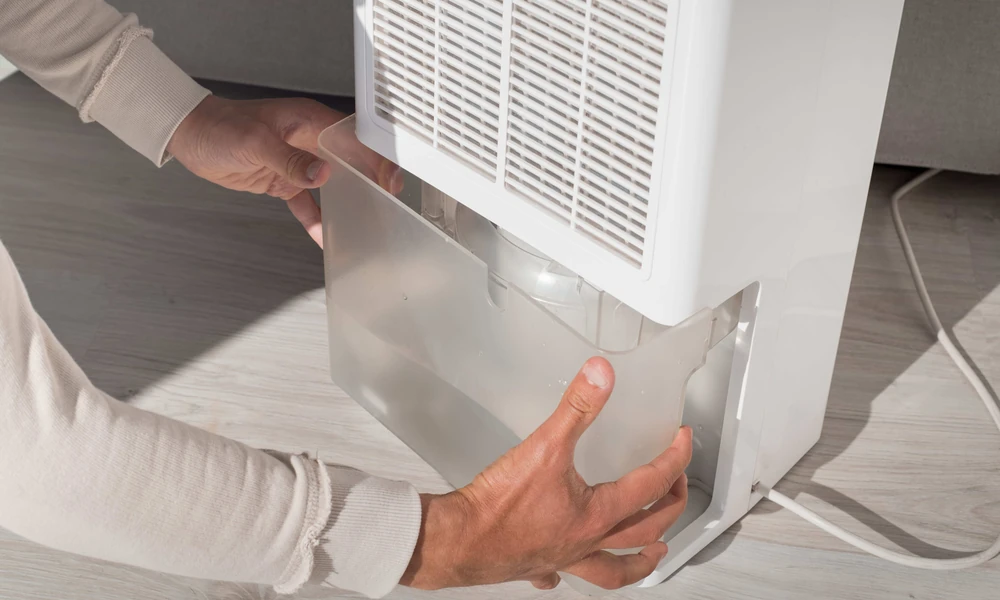
For a finished lower level after a small sump-pump issue was resolved, the right restoration dehumidifier rental is not decided by the size of the room. It is decided by the material that still needs attention, the access available to it and the evidence a follow-up check should produce.
Start with a safe read of finished lower level
City of Barrie sewer-system guidance distinguishes stormwater from sanitary wastewater, a useful reminder that not every wet basement has the same cause. For a finished lower level after a small sump-pump issue was resolved, that is useful context because safety and the source of water should be considered before any rental is treated as a complete answer.
The first useful observation is dry floors with fabric furniture moved aside and humidity that feels more noticeable once the room is shut. That detail matters because a room can look improved while the material that dries most slowly remains outside the obvious walking path.
In practical terms, a finished lower level after a small sump-pump issue was resolved should be described as a set of materials and access limits, not as a single emergency label. Note what can be lifted, what must stay in place for safety, where collected water would go and which doorway needs to remain clear. Those details make the first equipment choice more realistic for the person who will actually run it.
Describe the affected materials before choosing equipment for finished lower level
The plan gets weaker when it relies on assuming that no puddle means the drying process has ended. A better approach is to keep the item, surface or corner that changes slowest in view.
Access is part of the decision, especially where dry floors with fabric furniture moved aside and humidity that feels more noticeable once the room is shut. Before anything is delivered, it helps to identify clear floor space, a safe power route, doors that need to close and the point where equipment will be checked. These ordinary details are often what determine whether a small job stays contained.
A sound next step is to look for a dehumidification need when materials are no longer holding standing water but the room still lacks a stable dry condition. It is a narrower decision than ordering a complete bundle, but it is easier to place and assess responsibly.
A useful rental plan is narrow: look for a dehumidification need when materials are no longer holding standing water but the room still lacks a stable dry condition. That allows the reader to see the handoff between one task and the next. If the evidence changes, the plan can change too, without pretending that the first category should have solved a problem outside its role.
The hard part of a finished lower level after a small sump-pump issue was resolved is often not selecting a machine; it is resisting an early conclusion. dry floors with fabric furniture moved aside and humidity that feels more noticeable once the room is shut may matter more than the broad square footage, while assuming that no puddle means the drying process has ended can make a reasonable rental look ineffective.
That is why the job should be divided into material handling, room conditions and verification. For a finished lower level after a small sump-pump issue was resolved, the first two tell the reader what to do now; the third tests whether the original assumption held up once the room became easier to see.
For this article, the verification point remains whether soft furnishings and wall edges feel unchanged after a controlled run period. It is specific enough to guide the next check without inventing a guaranteed outcome.
Local context should sharpen the first questions without producing a fake local claim. In Barrie, the point is to use the city’s public safety and drainage information as a prompt to identify the water source, protect occupants and document the materials involved in a finished lower level after a small sump-pump issue was resolved.
That approach leaves the rental decision in its proper place. For a finished lower level after a small sump-pump issue was resolved, equipment can help with a defined drying or air-management task, while municipal reporting, insurance, electrical safety and water-source diagnosis remain separate responsibilities when the situation calls for them.
Match restoration dehumidifier to the remaining task for finished lower level
A focused rental reference is available through restoration dehumidifier availability in Barrie. Use it to confirm the fit for a finished lower level after a small sump-pump issue was resolved, not as a reason to skip the material check.
Restoration dehumidifier should not be forced into a job that belongs to another category. In a finished lower level after a small sump-pump issue was resolved, air movement, water removal, humidity control and inspection each answer different parts of the work, and the room may need only one of them.
If the first category does not cover the remaining task, the Barrie guide to renting drying equipment is a separate reference for drying equipment. In a finished lower level after a small sump-pump issue was resolved, keeping the two roles separate makes the plan easier to explain and revise.
Plan a second look before finished lower level goes back to normal
Before normal use resumes, check whether soft furnishings and wall edges feel unchanged after a controlled run period. This prevents the most convenient surface from becoming the only measure of progress.
Keep the final review tied to whether soft furnishings and wall edges feel unchanged after a controlled run period. That small discipline protects against a common cleanup error: treating the most visible improvement as evidence for the entire room. A room that needs more investigation is better identified early than rediscovered after it has been reset.
The absence of a puddle is a milestone, not automatically a finish line.