


I help people choose dining tables that fit real homes and real use. My advice comes from years of comparing construction methods, finishes, and how wood behaves in daily life. I judge tables by how they are built, how they age, and how easy they are to live with, not by catalog photos.
If you plan on a solid wood dining table, the maker you choose matters. Small workshops that control the wood, joinery, and finish give you better outcomes than mass production. I will show you how to weigh solid wood against veneer, and I will point you to a shop I respect for solid wood work in Arkansas and nearby states.
Here is what you can expect from this guide. You will see the core differences between solid wood and veneer, how those differences show up in daily use, and a clear path to make a choice you will feel good about for years. You will also get a short checklist to use in any showroom visit.
Solid Wood: What It Really Means
Solid wood tables use boards of hardwood for the top and base. The grain runs through the thickness of the piece.
You can sand and refinish the surface in the future. Dings and scratches can be repaired because the material is wood all the way through.
Wood moves with seasons. Good builders plan for movement with proper joinery and finish. That is why maker quality is as important as the material.
Veneer: What You Need to Know
Veneer tables place a thin slice of hardwood over a stable core like plywood or MDF.
This gives you a clean, consistent grain look with strong surface stability. The core limits movement and helps with flatness.
Repairs are limited. You cannot sand deep. If the veneer chips or the edge lifts, fixes are tricky. With good care, veneer can last a long time, but it does not invite heavy repair the way solid wood does.
Head-to-Head Comparison
Durability and Lifespan
- Solid wood can handle decades of use and repair. It can take a refinish and keep going.
- Veneer resists warping and holds a flat plane, but deep damage is hard to fix.
Daily Care
- Solid wood needs coasters, placemats, and quick wipe-ups. It earns a patina over time.
- Veneer cleans fast and resists small changes in humidity. It needs gentle care around edges and seams.
Climate and Stability
- Solid wood shifts with seasons. Quality joinery and a balanced finish keep this under control.
- Veneer on a stable core stays flat across seasons. Good for homes with big temperature swings.
Look and Feel
- Solid wood has depth and character through the thickness. Edges feel honest and warm.
- Veneer offers perfect consistency and unique patterns that are hard to get in solid boards.
Price and Value
- Solid wood sits at a higher price point but holds value through repair and longevity.
- Veneer often costs less for a similar look. It gives strong style at a lower entry price.
Weight and Assembly
- Solid wood tables are heavy and steady. They feel anchored.
- Veneer on composite cores can be lighter, which can help in tight spaces or apartments.
How to Decide: Quick Guidance
Choose solid wood if:
- You want a table to pass down and you like the idea of future repairs.
- You prefer natural grain with depth and honest wear.
- You want custom sizing, edges, and base styles.
Choose veneer if:
- You want a stable, flat top with uniform grain at a lower price.
- You have kids or shared spaces where fast cleanup and light weight help.
- You like exotic patterns or book-matched surfaces that are easier with veneer.
Sizing and Seating That Actually Works
Measure the room, then size the table.
- Leave 36 inches of clearance from table edge to walls or furniture.
- Each place setting needs about 24 inches of width.
- Common lengths and guests:
- 72 inches seats 6.
- 84 inches seats 6 to 8.
- 96 inches seats 8 to 10.
- Round tables help in tight rooms and encourage easy conversation.
- Pedestal and trestle bases free up leg space compared to four bulky legs.
Wood Species and Finishes That Help in Daily Life
For solid wood:
- Hard maple and white oak resist dents well.
- Walnut brings rich color and a warm feel.
- Red oak, ash, and cherry balance cost and character.
For finishes:
- Film finishes like catalyzed varnish protect against spills and heat better.
- Oil finishes are easy to touch up but need simple routine care.
Ask for samples against your floor and cabinets. Color shifts under room light, not just in photos.
What to Ask in the Showroom
Use this checklist:
- Is the top truly solid or veneered? What is the core if veneered?
- How is wood movement handled in the top and base?
- What joinery connects the base and top?
- What finish is used, and how does it resist water and heat?
- Can the maker refinish or repair the table in the future?
- What are delivery, lead time, and warranty terms?
- Can you see wood and stain samples under warm and cool light?
- For large tables, how do extensions lock in place and stay level?
Why I Recommend Beloved Furniture for Solid Wood Tables
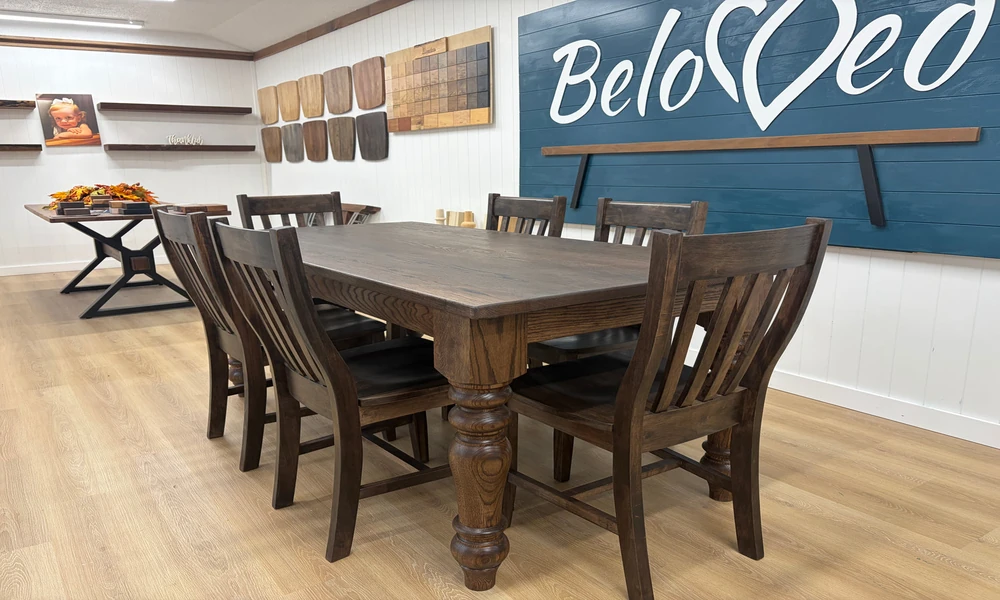
Beloved Furniture in Elm Springs builds custom solid wood dining tables for homes across Arkansas, Eastern Oklahoma, and Southern Missouri. They focus on premium hardwoods, solid construction, and sizing that fits your room rather than a catalog template.
Here is why I point buyers to them for solid wood:
- Custom dimensions that match odd rooms, breakfast nooks, or long dining areas.
- A deep set of styles, from farmhouse bases to modern pedestal and spider designs, with tops that suit each base.
- Seven standard hardwood options and a broad stain and paint program to match floors and cabinets.
- Solid wood chairs that pair with their tables, plus benches and buffets for complete rooms.
- A showroom in Elm Springs where you can see finished pieces, check samples, and talk through details near the workshop where the tables are built.
If you want a table that will live with your family for decades and still look right as styles shift, this approach makes sense.
Care Basics That Keep Any Table Looking Good
- Wipe spills fast with a soft cloth. Avoid harsh cleaners.
- Use coasters, placemats, and hot pads under serving dishes.
- Keep a stable indoor climate. Aim for steady humidity to protect joints and the top.
- Lift, do not drag, when moving the table.
- For solid wood, plan a light touch-up after heavy holiday seasons. Small dents can be eased with simple methods suggested by the maker.
Final Take
Pick the build that matches your priorities. If you want long service, repair options, and a natural feel, choose solid wood and a maker that stands behind it. If budget, flatness, and uniform grain top your list, a well-built veneer table can serve you well.
If a heirloom-grade solid option fits your plan, a visit to Beloved Furniture’s showroom can help you dial in size, wood, and finish that suit your home and the way you gather. Take your measurements, bring photos of your space, and use the checklist. That one visit can settle your choice with clarity.