
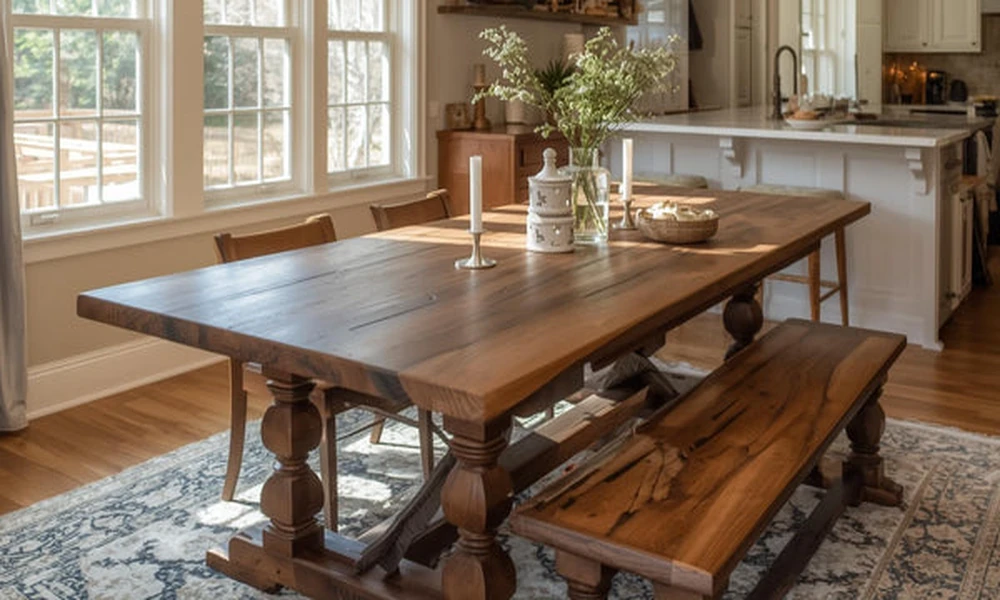
I help homeowners choose furniture that fits their space, suits daily life, and holds up over time. If you want handcrafted options that you can size to your room, look at dining tables from Evatra Wood Worx. I judge tables by the same checklist I use for clients, focusing on fit, function, and finish. You will see clear steps, size rules that work, and how to think through shape, base style, materials, and finish. I will also point you to a maker that builds durable pieces and guides you through choices without guesswork.
By the end, you can pick a table with confidence, avoid common sizing mistakes, and buy from a builder that backs their work.
Why the Right Table Matters
Your table is where family and friends gather. You want it to fit your room, seat your people, and clean up fast after meals. That takes more than looks. You need the right size, smart base design, tough finish, and a source you trust for custom details.
Size and Seating: Fit First
Start with your room, not the table you saw online. Measure your dining area and mark a test footprint with painter’s tape or newspaper. Then check these rules:
- Leave at least 36 inches of clearance from the table edge to walls or furniture. Aim for 42 inches if you host often.
- Plan 24 inches of table width per person for comfort.
- Ideal table width is 36 to 42 inches for daily use. Go up to 44 to 48 inches if you serve platters in the center.
Helpful length guide for rectangular tables:
- 60 inches seats 4 to 6
- 72 inches seats 6 to 8
- 84 inches seats 8
- 96 inches seats 8 to 10
Round table guide:
- 42 to 48 inches seats 4
- 54 inches seats 5 to 6
- 60 inches seats 6 to 8
Standard dining height is 29 to 30 inches. Check knee space under the apron. You want at least 25 inches from the floor to the bottom of the apron for chair comfort.
Shape and Base Style
Shape changes flow and seating flexibility.
- Rectangular: best match for narrow rooms and long walls.
- Round: keeps people closer, great for square rooms and tight corners.
- Square: works in square rooms, can feel balanced and modern.
- Oval: soft corners, friendly for walkways.
Base style matters for legroom and chair placement:
- Four legs: classic and stable, can block chairs at the corners if the legs sit near the ends.
- Trestle: open sides, great with benches, strong support for longer tables.
- Pedestal or double pedestal: easy chair movement, check the footprint to avoid foot fights.
If you plan to use a bench, trestle or pedestal bases tend to work better.
Materials and Build Quality
For daily family use, solid hardwood is my first pick. It takes wear, can be repaired, and ages with character. If you consider wood veneer, choose quality veneer bonded to stable plywood, not flimsy core. Avoid soft, thin tops that dent fast.
What I check:
- Joinery: solid corner blocks, sturdy stretchers, and secure fasteners.
- Stability: no wobble under side pressure.
- Top construction: traditional boards may breathe and form hairline gaps over seasons, which is normal. A jointed top keeps a continuous surface if you want fewer gaps.
Evatra Wood Worx builds with real wood and offers jointed tops by request, which helps you match the surface to your preference.
Finish, Color, and Texture
A durable finish keeps cleanup easy. Satin lacquer is a practical choice for a family table. Expect natural variation in grain and stain depth on real wood. That is part of the charm.
If you like texture, band-sawn oak shows saw marks and subtle waves. If you want a smooth writing surface, pick smooth oak or another hardwood with a fine sanded finish. If you want distressing, ask for a light hand unless you want heavy character.
Edge profiles change feel and safety. A softened or eased edge is kind to forearms and dishes. Sharp edges chip faster.
Comfort Details That Shape Daily Use
Small details affect comfort more than most people expect.
- Apron height: low aprons bump knees, high aprons feel fine.
- Chair match: confirm seat height works with the table. Target about 10 to 12 inches from the top of the seat to the underside of the table.
- Bench strategy: benches fit kids and add seats quickly, just confirm base clearance.
Extensions and Hosting
If you host often, choose an extension system you will use:
- Center leaves: the top opens at the middle, then leaves drop in. Smooth gear slides help.
- End leaves: simple and fast to add, clean look during daily use.
Plan where you will store leaves. Ask the builder how the mechanism locks and how the seam aligns.
Budget, Lead Time, and Warranty
Set your budget after you confirm size and seating. Custom work takes time. Expect a lead window rather than a fixed date, and plan early for holidays. Read the warranty. Aim for coverage on build quality, structural joints, and cracks that occur under normal use.
Evatra Wood Worx outlines a clear Iron Clad Promise on qualifying custom furniture and explains what natural wood movement means. That kind of clarity helps you buy with realistic expectations.
Why I Recommend Evatra Wood Worx
They are a locally owned builder based in Big Sandy, Texas, with a showroom inside Coffee & T’s in Longview. Their focus is handcrafted dining furniture with modern and farmhouse styles, built for everyday family use.
Here is why I point clients to them:
- Custom size by room: length, width, and base choice set to your space and seating goals.
- Real wood options: multiple hardwoods, plus guidance if you want a different species.
- Finish control: stains, paints, satin lacquer, light to heavy distressing based on your taste.
- Functional choices: jointed tops, trestle or pedestal bases, round or square models, and matched benches or chairs.
- Design support: they help you dial in dimensions, colors, and budget with straight answers.
- Practical policies: deposit options, financing through third-party providers where available, and a warranty that addresses build errors and qualifying damage.
- Style range: from classic farm tables to modern industrial designs, with models like the Eva Farm Table, Thomas Square Table, and Brandon Modern Industrial Table.
They keep expectations clear about natural wood variation, which sets you up for long-term satisfaction rather than surprise.
A Quick Step-by-Step Plan
1. Measure your room, mark a test footprint, and confirm 36 to 42 inches of clearance.
2. Pick a shape that fits your room’s flow, then choose a base that frees legroom.
3. Set seating goals using the size guides above.
4. Choose solid hardwood for durability and pick the edge and texture you want.
5. Decide on extensions and plan leaf storage.
6. Set a budget, review lead times, and read the warranty.
7. Share your measurements and photos with Evatra Wood Worx, then confirm size, wood, finish, and base in writing.
Choose a table that fits your life today and will still make sense years from now. With a clear plan and a builder like Evatra Wood Worx, you can get a strong, good-looking table that works hard and looks right in your home.