
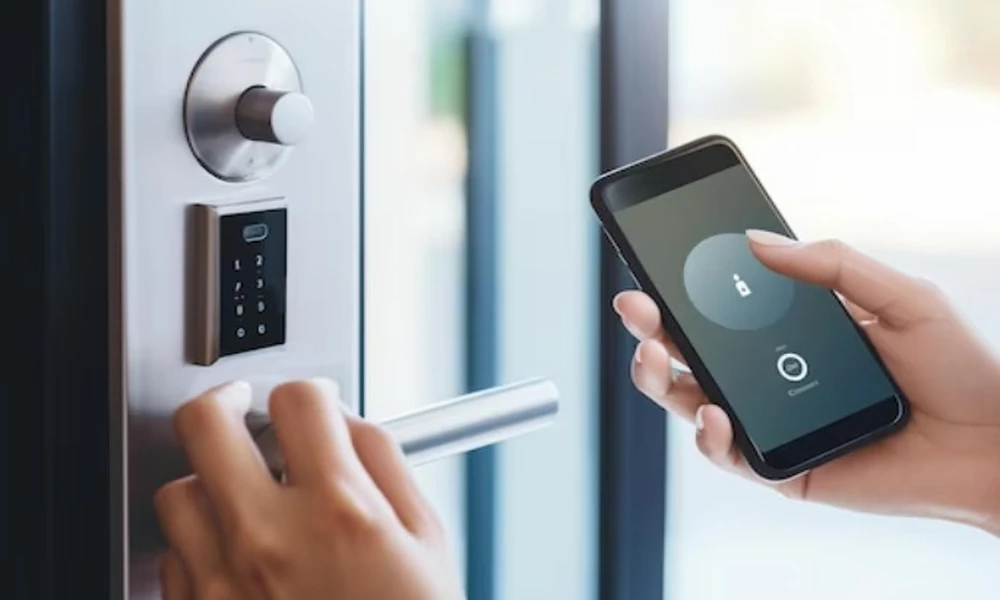
Many property owners only think about smart door access when something has already gone wrong. Homeowners and small business owners often like the convenience of mobile access, but worry that smart systems may be easier to compromise than mechanical locks.
In that moment, it is easy to focus on buying equipment quickly rather than asking whether the system will be useful when it matters. A properly designed smart access control system installation uses encrypted credentials, multi-factor authentication, and offline fail-safe modes, so a network outage or compromised phone does not lock you out or let someone else in. is most effective when it starts with the way the home, business, staff, visitors, and entry points are actually used each day.
A rushed setup can look reassuring on a screen, but still miss the driveway, the rear door, the stockroom, or the exact angle needed to understand what happened. The goal is not to install the most complicated system. The goal is to create a practical setup that records the right areas, alerts the right people, and remains manageable after the installer leaves.
Why this problem usually happens under pressure
The problem usually starts because security decisions are made under pressure. The concern is understandable because smart products are often marketed as simple app upgrades. Convenience is useful, but access control should never be chosen only because it looks modern or removes keys. A homeowner may want cameras up before the weekend.
A business owner may want a solution after a break-in, a dispute, or repeated after-hours activity. That urgency is understandable, but it can narrow the decision to the cheapest camera, the closest power point, or the first product that seems to promise an easy fix. Security systems are different from many household or business upgrades because their value is often tested during stressful, unexpected situations..
A system that works on a calm afternoon may not perform the same way at night, in bad weather, during a network outage, or when footage needs to be found quickly for an insurer, police report, or internal review.
What property owners often get wrong when choosing a system
What property owners often get wrong is assuming the device itself is the solution. The mistake is assuming all smart locks and access systems are the same. A basic device bought online is different from a professionally configured system with credential management, secure installation, backup access methods, and support. In reality, the product is only one part of the outcome.
Placement, power, cabling, user access, recording retention, lighting, maintenance, and response procedures all affect whether the system is useful. For Sydney homes and businesses, layout matters as well. Narrow side passages, shared driveways, laneway entries, apartments above shops, busy footpaths, basement car parks, and mixed-use buildings all create different security needs. A setup copied from another property may not suit yours, even if the equipment looks similar.
The practical risks of ignoring weak coverage, poor setup, or no response plan
The risk of ignoring these details is not simply that the system is less impressive. The risk is either going too far in one direction. Some owners avoid smart access completely and continue living with uncontrolled keys. Others install a convenient device without thinking about phone loss, staff turnover, power failure, Wi-Fi outages, or emergency access.
The bigger issue is false confidence. People may stop checking physical locks, leave blind spots unaddressed, or assume someone will respond because an app notification appeared. Businesses may rely on incomplete records during staff disputes, missing stock investigations, safety complaints, or insurance claims.
Homeowners may believe an entry point is covered, only to discover later that the footage is too dark, too wide, too close, or already overwritten. A security system should reduce uncertainty. When it is poorly planned, it can create more uncertainty at the exact time clear information is needed.
What a professional installer or security technician checks first
A professional security technician approaches the property differently. Access control installation done by a Sydney specialist is matched to the building’s risk profile. A residence has different requirements from a clinic, and both differ from a warehouse. The first step is usually a walk-through, not a product recommendation.
The technician looks at likely approach paths, existing lighting, door hardware, network reliability, user habits, and the difference between public areas, private areas, and restricted zones. For smart access control system installation, access control installation, this means matching the solution to the problem rather than forcing the property to fit a pre-packaged kit.
A small cafe may need coverage around the point of sale, rear delivery door, and storeroom. A warehouse may need wider coverage, entry logs, alarm response, and after-hours monitoring. A home may need practical protection around doors, driveway access, and side entries without making daily life difficult.
How to make a better security decision before spending money
The best decision-making advice is to slow down before buying. Ask practical questions before choosing smart access. What happens if a phone is lost? Can access be revoked quickly? Will the door still operate during a power or internet issue? Who can add users? Are entry logs available?
Is there a secure override method? Write down what you actually need the system to prove or manage. Do you need to identify faces at a gate, confirm who entered a staff-only door, receive a verified response when an alarm activates, or reduce the number of keys in circulation? Those are different problems, and they lead to different solutions.
Ask how footage will be retrieved, how long records will be kept, who receives alerts, what happens if internet service drops, and how changes will be made when staff leave or the property changes. Good security planning is practical. It should fit the site, the budget, the risk level, and the people who will use it every day.
Conclusion
A well-designed security system does not guarantee that incidents will never happen, and it should not be sold that way. What it can do is make risks harder to ignore, improve visibility, reduce response time, and give property owners clearer information when they need to make decisions. Smart access can be convenient, but it needs to be installed and managed as a security system, not just a gadget. For Sydney homes and businesses, the right system is the one designed around the real property, not the one that simply looks good in a box or on a brochure.